
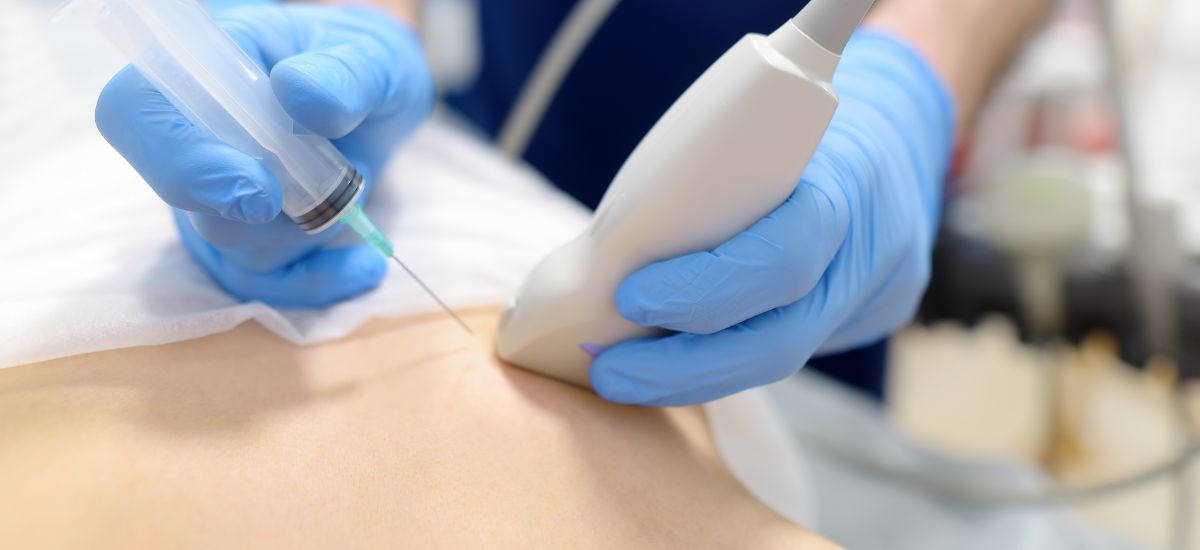
Ultrasound-guided injections and aspirations use live imaging to help place a needle more accurately into or around a specific joint, tendon, bursa, cyst, or soft tissue area.
The ultrasound does not treat the condition by itself. Instead, it helps the clinician see the area being treated, guide the needle, and deliver medication or remove fluid with greater precision.
At DeNova Health, ultrasound guidance may be used when accuracy matters, when the treatment area is small or difficult to access, or when fluid needs to be removed from an irritated or swollen area.
What It May Help With
Ultrasound-guided procedures may be discussed when a precise injection or fluid removal may improve the treatment process.
They may be considered for:
- Joint pain or swelling: May help guide treatment into an irritated joint or remove excess fluid when appropriate.
- Bursitis: May help target a swollen or inflamed bursa with greater accuracy.
- Tendon sheath irritation: May be used when medication needs to be placed near a specific tendon structure.
- Cysts or fluid collections: Aspiration may help remove fluid from certain cysts or localized fluid pockets.
- Targeted injection therapy: May be used with treatments such as corticosteroids, hyaluronic acid, PRP, or other injectable options when appropriate.
When This Procedure May Be Considered
This procedure may be considered when:
- The target area is small or specific: The injection needs to reach a precise joint, tendon sheath, bursa, or soft tissue space.
- Swelling or fluid is present: Aspiration may be discussed when fluid buildup is causing pressure, discomfort, or needs further assessment.
- Previous treatment has not been enough: A more accurate injection approach may be considered after symptoms continue despite other care.
- Anatomy is more complex: Ultrasound can help guide the needle when the area is harder to access by touch alone.
- The care plan requires precision: Image guidance may help ensure the treatment is delivered to the intended location.
What to Expect at Your Visit
Your visit starts with a review of your symptoms, health history, previous treatment, and the reason an injection or aspiration is being considered.
During the procedure, ultrasound gel is placed on the skin, and a handheld ultrasound probe is used to view the area. Once the target is identified, the skin is cleaned and the needle is guided into the appropriate location.
For an injection, medication is placed into or around the targeted tissue. For an aspiration, fluid is removed through the needle. The procedure is usually brief, though the timing can vary depending on the area being treated and whether fluid is being removed.
Aftercare and Recovery
Aftercare may include:
- Keeping the area protected: You may be asked to avoid heavy activity or repeated strain for a short time.
- Temporary soreness: Mild tenderness, pressure, or aching can happen after the procedure.
- Monitoring swelling: If fluid was removed, you may be asked to watch for returning swelling or increased discomfort.
- Gradual return to activity: Your clinician will explain when to resume work, exercise, therapy, or regular movement.
- Follow-up planning: A follow-up may be recommended depending on your response or if fluid testing is needed.
Possible Side Effects and Limitations
Possible side effects may include:
- Temporary pain or tenderness: The area may feel sore after the needle is placed.
- Bruising or swelling: Mild bruising, swelling, or irritation may occur around the injection site.
- Short-term stiffness: The joint or soft tissue area may feel stiff or sensitive after treatment.
- Fluid returning: If an aspiration is performed, fluid may come back depending on the underlying cause.
- Variable results: Some patients improve, while others may need additional care, imaging, reassessment, or a different treatment plan.
Although uncommon, infection is a possible concern with any injection or aspiration procedure. If you develop increasing redness, warmth, severe swelling, fever, or worsening pain after treatment, you should seek medical advice promptly.
Book an Ultrasound-Guidance Injection or Aspiration Consultation
If pain, swelling, or fluid buildup is affecting your movement, DeNova Health can assess whether an ultrasound-guidance injection or aspiration may be appropriate.
Book an appointment to review your symptoms, discuss your treatment options, and determine whether image-guided care fits your condition and goals.