
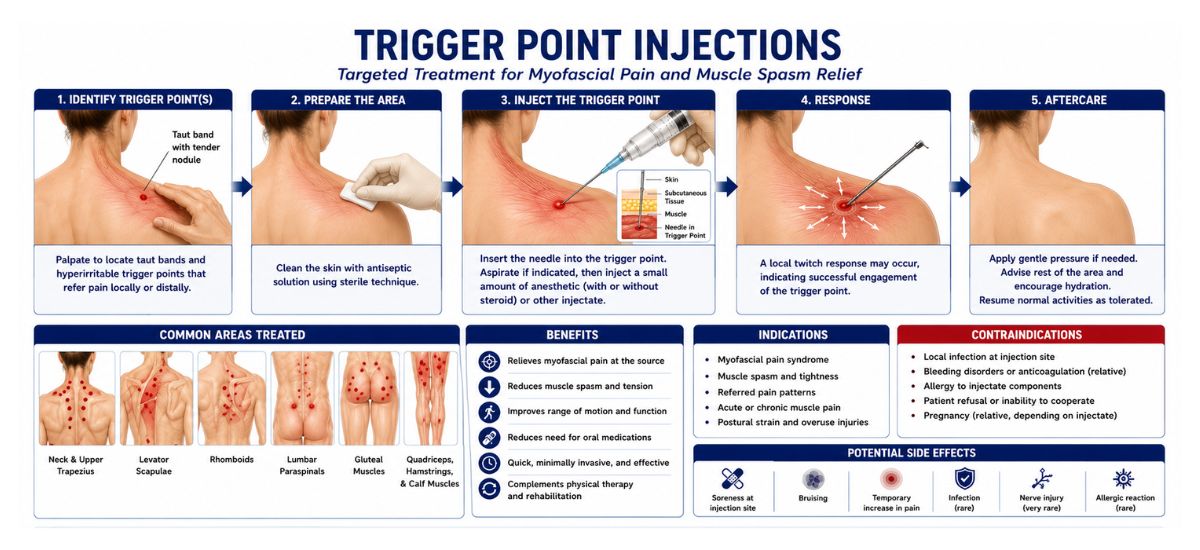
Trigger point injections are used to treat painful muscle knots, often called trigger points. These tight areas can form within a muscle and may cause pain in that spot or refer pain to another area of the body.
Trigger points can make muscles feel tight, sore, weak, or difficult to relax. They may develop after muscle strain, repetitive activity, poor posture, stress on the body, or ongoing guarding around an injury.
At DeNova Health, trigger point injections may be considered when muscle pain is focused, persistent, and not settling with stretching, massage, exercise, therapy, or other conservative care.
What This Procedure Helps With
Trigger point injections are designed to calm a painful, overactive muscle area. A small needle is placed into the trigger point, and medication may be injected to help reduce pain and muscle tightness.
The goal is to help break the pain-spasm cycle. When the muscle relaxes, it may be easier to move, stretch, strengthen, and return to regular activity.
When Trigger Point Injections May Be Considered
Trigger point injections may be discussed when muscle pain is not improving and a specific tight or tender area can be identified.
They may be considered when:
- A muscle knot is painful: A focused tender spot can be felt in the muscle.
- Pain refers to another area: Pressing the trigger point may cause pain to travel or spread.
- Movement feels restricted: Muscle tightness is limiting motion, comfort, or daily function.
- Conservative care has not been enough: Stretching, massage, therapy, rest, or exercise changes have not fully settled symptoms.
- Muscle guarding is part of the problem: The muscle stays tight or protective after injury, overuse, or irritation.
What to Expect at Your Visit
Your visit starts with an assessment of your symptoms, movement, and the painful muscle area. If a trigger point injection is appropriate, the clinician will explain what area is being targeted and why.
The area is cleaned and prepared. A small needle is placed into the trigger point, and medication may be injected. You may feel pressure, aching, a twitch response, or temporary discomfort during the procedure.
Aftercare and Recovery
Aftercare may include:
- Temporary soreness: The treated muscle may feel tender, achy, or bruised after the injection.
- Gentle movement: Light movement or stretching may be recommended to help the muscle relax.
- Activity guidance: You may be asked to avoid heavy lifting, intense exercise, or repetitive strain for a short time.
- Supportive care: Physical therapy, massage therapy, exercise training, or posture changes may still be part of your plan.
- Follow-up review: A follow-up may be recommended if symptoms are persistent or recurring.
Possible Side Effects and Limitations
Possible side effects may include:
- Injection-site soreness: The area may feel tender or irritated after treatment.
- Bruising or swelling: Mild bruising, swelling, or pressure may occur where the needle was placed.
- Temporary stiffness: The muscle may feel tight or sensitive before it settles.
- Incomplete relief: Some trigger points may require additional care, reassessment, or a different treatment approach.
- Variable results: Some patients respond well, while others may need ongoing therapy or a broader pain-management plan.
Trigger point injections are not a guaranteed fix. They may help reduce muscle pain and tightness, but long-term improvement often depends on addressing the movement patterns, posture, strength, or activity habits that contributed to the problem.
Book a Trigger Point Injection Consultation
If painful muscle knots are limiting movement, comfort, work, sleep, or daily activity, DeNova Health can assess whether trigger point injections may be appropriate.
Book an appointment to review your symptoms, discuss your treatment options, and create a care plan focused on reducing muscle pain and improving movement.