
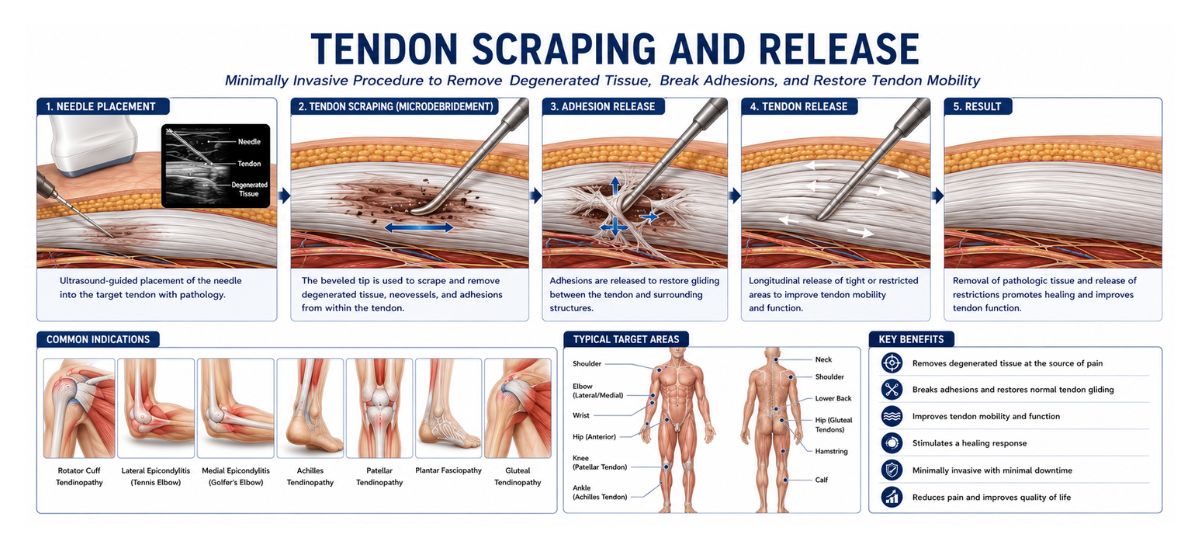
Tendon scraping and release is a targeted medical procedure used in select cases of chronic tendon pain.
It involves working around the affected tendon to address areas of irritation and restricted tissue movement that may be contributing to persistent symptoms. This is a medical procedure performed beneath the skin and is different from surface-level techniques such as massage or external soft tissue scraping tools.
At DeNova Health, this procedure may be discussed when tendon pain has become ongoing and a more focused treatment approach may be appropriate.
Why This Procedure Is Used
In some cases, tendon pain is influenced by surrounding tissue changes rather than the tendon alone. Scar tissue, thickening, or friction between tissues may contribute to ongoing symptoms.
This procedure is generally considered after a full assessment and when conservative treatment options have not provided sufficient improvement.
What the Procedure Involves
The exact approach depends on the tendon involved and the underlying cause of pain. The procedure may involve carefully releasing or scraping tissue around the tendon.
For certain Achilles tendon problems, the nearby plantaris tendon may also be assessed if it appears to be contributing to compression or irritation.
The procedure is planned around the specific diagnosis and is not used for every type of tendon pain.
When Tendon Scraping and Release May Be Considered
It may be considered when:
- Tendon pain has not settled: Symptoms continue despite therapy, activity changes, bracing, footwear changes, orthotics, or injections.
- The tendon feels restricted or irritated: Pain may be linked to friction, thickened tissue, or poor movement between tissue layers.
- Daily movement is affected: Walking, stairs, work, sport, or exercise remains limited by tendon pain.
- A specific tendon area can be targeted: The painful area can be assessed and matched to a clear treatment plan.
- A mechanical cause is suspected: Surrounding tissue or nearby structures may be contributing to ongoing irritation.
What to Expect at Your Visit
Your visit starts with an assessment of your symptoms, movement, and treatment history. If tendon scraping and release is appropriate, the clinician will explain what structure is being targeted and why.
The treatment area is cleaned and prepared. The procedure is then performed around the affected tendon area. You may feel pressure, aching, or temporary discomfort during treatment.
Recovery and Follow-Up
Aftercare may include:
- Protected activity: You may need to reduce heavy loading, sport, or repetitive strain for a period of time.
- Temporary soreness: The treated area may feel tender, achy, or irritated during early recovery.
- Movement guidance: Gentle movement may be introduced to help the tendon and surrounding tissue move properly.
- Rehabilitation support: Physical therapy, stretching, strengthening, bracing, or orthotics may be recommended.
- Progress review: Follow-up may be used to monitor healing, function, and return-to-activity planning.
Possible Side Effects and Limitations
Possible side effects may include:
- Temporary pain flare-up: The tendon area may feel more irritated before it settles.
- Bruising or swelling: Mild bruising, swelling, or tenderness may occur around the treated area.
- Stiffness: The tendon or nearby joint may feel tight during early recovery.
- Incomplete relief: Some patients may need additional therapy, reassessment, or another treatment option.
- Variable results: Outcomes depend on the tendon involved, the cause of irritation, and the follow-up care plan.
Tendon scraping and release is not a guaranteed fix. It may be helpful when persistent tendon pain is linked to surrounding tissue irritation or mechanical restriction, but results depend on the diagnosis and the recovery plan.
Book a Tendon Scraping and Release Consultation
If chronic tendon pain is limiting walking, work, exercise, or daily movement, DeNova Health can assess whether tendon scraping and release may be an appropriate option.
Book an appointment to review your symptoms, discuss your treatment options, and determine whether this procedure fits your care plan.