
COOLIEF
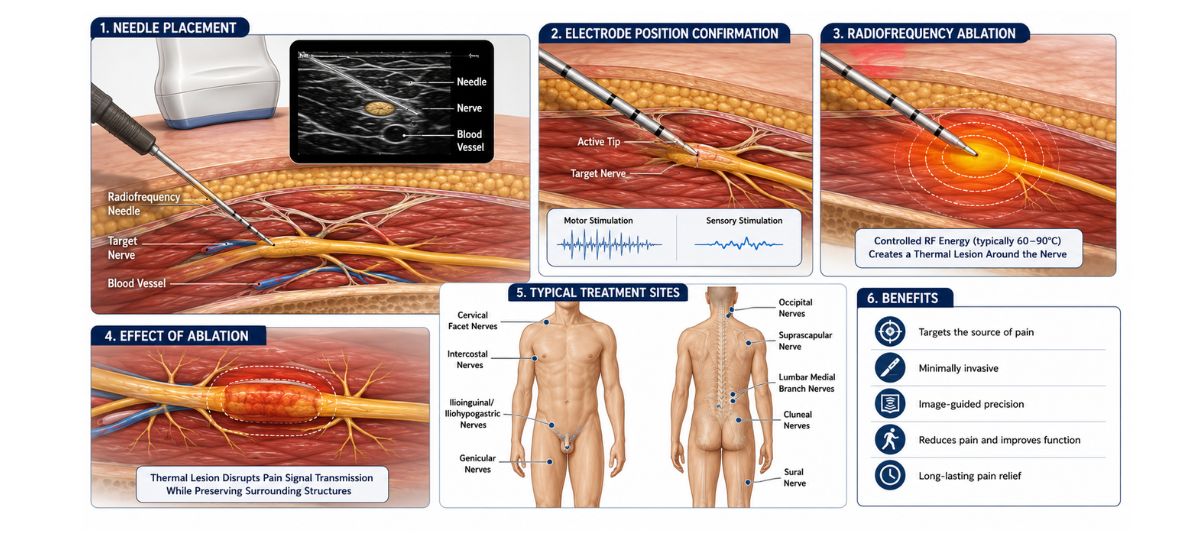
Peripheral nerve radiofrequency ablation is a minimally invasive procedure used to reduce pain signals from specific nerves.
COOLIEF is a cooled radiofrequency treatment. It uses radiofrequency energy to target sensory nerves that are carrying pain signals, while the cooling technology helps create a controlled treatment area around the nerve.
At DeNova Health, this procedure may be considered when chronic pain appears to be coming from specific peripheral nerves and other conservative treatment options have not provided enough relief.
What This Procedure Does
Peripheral nerve radiofrequency ablation is designed to reduce pain by targeting sensory nerves involved in transmitting pain from the affected area.
During the procedure, radiofrequency energy is applied to interrupt the nerve’s ability to carry pain signals. This may help decrease discomfort and improve function in appropriately selected patients.
When Peripheral Nerve Radiofrequency Ablation May Be Considered
This procedure may be discussed when pain is persistent, nerve-mediated, and affecting daily life.
It may be considered when:
- Pain has lasted for several months: Symptoms are ongoing and have not improved enough with other care.
- A nerve target can be identified: The pain pattern suggests that specific sensory nerves may be contributing.
- Conservative treatment has not been enough: Therapy, bracing, medication, activity changes, or injections have not provided lasting relief.
- Surgery is not the preferred next step: A less invasive option may be discussed before considering surgical treatment.
- A diagnostic block supports the plan: In some cases, a temporary nerve block may be used first to help confirm whether the nerve is an appropriate target.
What to Expect at Your Visit
Your visit starts with an assessment of your symptoms, medical history, and previous treatments. If radiofrequency ablation is appropriate, the clinician will explain how the procedure works and why a specific nerve target may be involved.
The treatment area is cleaned and numbed. A needle-like probe is guided toward the target nerve, and radiofrequency energy is applied to interrupt pain signals. You may feel pressure, warmth, or temporary discomfort during the procedure.
Aftercare and Recovery
Aftercare may include:
- Short-term rest: You may be asked to avoid strenuous activity for a short period.
- Temporary soreness: The treatment area may feel sore, tender, or irritated for several days.
- Gradual improvement: Pain relief may not happen immediately and can take time to develop.
- Return to movement: Regular activity may be restarted gradually based on your clinician’s instructions.
- Follow-up review: A follow-up may be recommended to assess pain relief, movement, and next steps.
Possible Side Effects and Limitations
Possible side effects may include:
- Temporary soreness: Pain or tenderness may occur around the treatment site.
- Numbness or altered sensation: The treated area may feel numb, sensitive, or different for a period of time.
- Bruising or swelling: Mild bruising, swelling, or irritation may occur where the needle was placed.
- Temporary pain flare-up: Symptoms may feel worse for a short time before settling.
- Variable results: Some patients respond well, while others may need reassessment or another care option.
Radiofrequency ablation is not a permanent cure. Pain relief can vary, and treated nerves may recover or regrow over time. Results depend on the diagnosis, nerve target, severity of symptoms, and overall treatment plan.
Book a COOLIEF Consultation
If chronic pain is limiting your movement, sleep, work, or daily activity, DeNova Health can assess whether peripheral nerve radiofrequency ablation may be an appropriate option.
Book an appointment to review your symptoms, discuss your treatment options, and determine whether COOLIEF fits your care plan.