
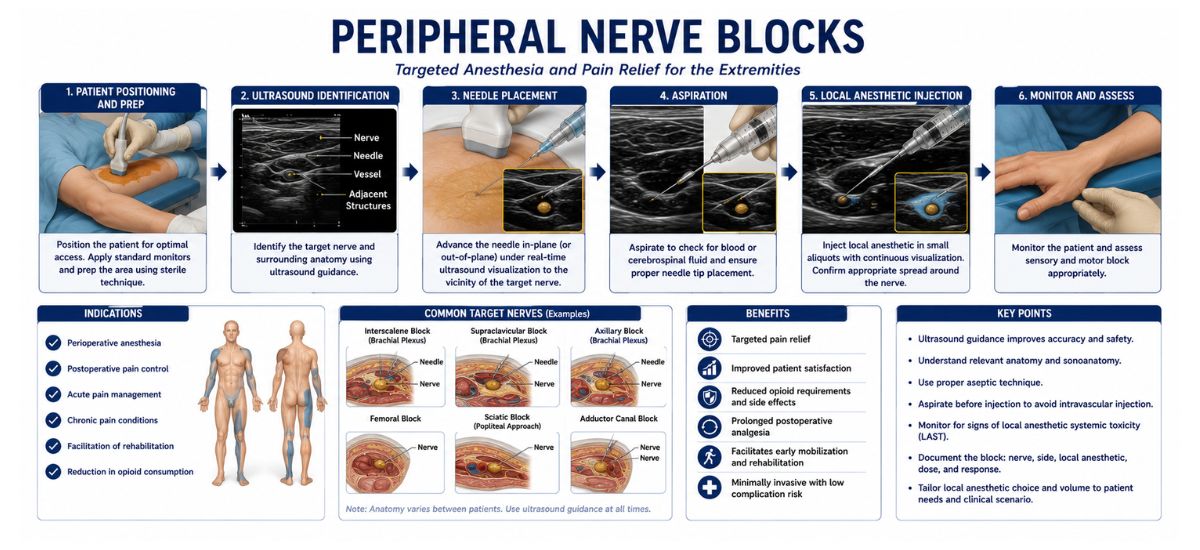
A peripheral nerve block is a procedure that places medication near a specific nerve to temporarily reduce pain in a targeted area.
Peripheral nerves carry sensation between the body and the nervous system. When a specific nerve is suspected to be contributing to symptoms, a nerve block may be used as a targeted intervention.
At DeNova Health, peripheral nerve blocks may be considered when symptoms suggest involvement of a specific nerve and a focused approach may help guide further treatment.
Why This Procedure Is Used
Peripheral nerve blocks may be used for short-term symptom relief and to help clarify the source of pain.
In some cases, the goal is to reduce pain to support improved movement and daily activity. In other cases, the response to the block can help determine whether a specific nerve is contributing to the symptoms.
The effects are temporary, but the information gained from the response can help guide next steps in care.
When a Peripheral Nerve Block May Be Considered
A peripheral nerve block may be discussed when pain follows a nerve pattern or when the source of pain needs to be narrowed down.
It may be considered when:
- Nerve symptoms are present: Burning, tingling, numbness, shooting pain, or electric-like discomfort may suggest nerve involvement.
- Pain follows a specific path: Symptoms travel along a recognizable area of the foot, ankle, leg, hand, arm, or another body region.
- The diagnosis needs confirmation: A temporary block may help show whether a certain nerve is contributing to the pain.
- Movement is being affected: Pain is limiting walking, work, exercise, sleep, or daily activity.
- A future treatment is being planned: The response to a nerve block may help guide whether another procedure or care option should be considered.
What to Expect at Your Visit
Your visit begins with a review of your symptoms, medical history, and pain pattern. If a nerve block is appropriate, the clinician will explain which nerve is being targeted and why.
The treatment area is cleaned and prepared. Medication is then placed near the nerve to temporarily reduce pain signaling. You may feel a pinch, pressure, or brief discomfort during the procedure.
Aftercare and Recovery
Aftercare may include:
- Temporary numbness: The area supplied by the nerve may feel numb, heavy, or different for a short time.
- Activity caution: You may need to avoid driving, strenuous activity, or putting stress on a numb area until normal feeling returns.
- Symptom tracking: Your clinician may ask you to note how much relief you feel and how long it lasts.
- Follow-up planning: Your response may help guide the next step in your care plan.
- Ongoing support: Therapy, bracing, orthotics, footwear changes, or further treatment may still be recommended.
Possible Side Effects and Limitations
Possible side effects may include:
- Temporary soreness: The injection area may feel tender or irritated after the procedure.
- Bruising or swelling: Mild bruising, swelling, or pressure may occur around the injection site.
- Numbness or weakness: The affected area may feel numb, heavy, weak, or harder to control until the block wears off.
- Incomplete relief: Pain may continue if another structure or nerve is also contributing.
- Variable duration: Relief may be short-term, longer-lasting, or limited depending on the condition and nerve involved.
Complications are uncommon, but any injection near a nerve requires care. If you notice worsening weakness, severe pain, spreading redness, fever, or symptoms that do not settle as expected, contact a medical provider.
Book a Peripheral Nerve Block Consultation
If burning, tingling, numbness, shooting pain, or nerve-related discomfort is affecting your daily life, DeNova Health can assess whether a peripheral nerve block may be appropriate.
Book an appointment to review your symptoms, discuss your treatment options, and determine whether this procedure fits your care plan.