
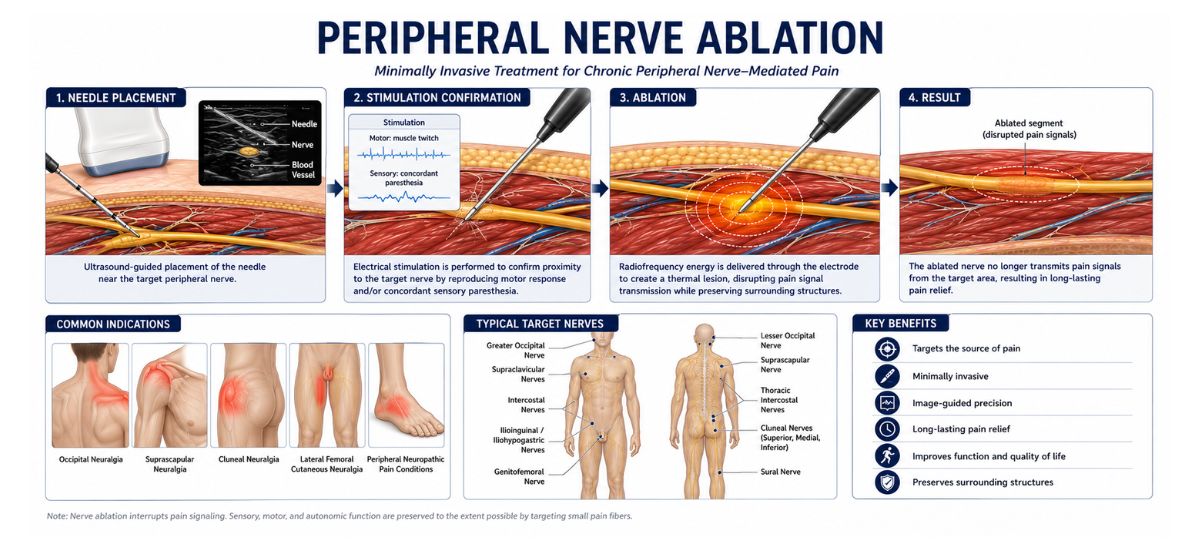
Peripheral nerve ablation is a procedure used to reduce pain signals coming from a specific nerve outside the brain and spinal cord.
Peripheral nerves travel through the body and carry signals related to movement, sensation, and pain. When a nerve continues sending pain messages after an injury or chronic condition, ablation may be considered as a way to quiet those signals.
At DeNova Health, this procedure may be discussed when pain appears to be coming from a clearly identified nerve and other treatment options have not provided enough relief.
The Goal of the Procedure
Peripheral nerve ablation is not designed to repair a joint, tendon, ligament, or muscle. Its purpose is to reduce the pain signal being carried by a targeted sensory nerve.
The procedure uses controlled energy to affect the nerve's ability to send pain messages. This may help reduce discomfort and make it easier to move, walk, work, sleep, or participate in rehabilitation.
Because nerve pain can come from different sources, the key step is identifying whether a specific nerve is truly contributing to the symptoms.
When Peripheral Nerve Ablation May Be Considered
Peripheral nerve ablation may be discussed when pain is persistent, localized, and likely connected to a specific nerve pathway.
It may be considered when:
- Pain follows a nerve pattern: Symptoms may include burning, shooting, tingling, numbness, or pain that travels along a specific path.
- The pain source can be narrowed down: The clinician can identify a likely nerve target based on your symptoms and assessment.
- Other care has not been enough: Therapy, bracing, orthotics, injections, activity changes, or medication have not provided lasting relief.
- Daily life is being affected: Walking, sleeping, working, exercising, or normal movement is becoming difficult.
- A diagnostic step supports the plan: In some cases, a temporary nerve block may be used first to see whether the nerve is the right target.
How the Appointment Works
Your visit begins with a review of your symptoms, health history, previous treatments, and how the pain is affecting your daily routine. The clinician guides a small needle-like probe toward the targeted nerve, then uses controlled energy to reduce the nerve's pain signaling.
You may feel pressure, warmth, aching, or temporary discomfort during the procedure. Your clinician will explain what to expect before treatment begins.
Recovery After the Procedure
Aftercare may include:
- Short-term activity changes: You may need to avoid strenuous activity or heavy loading for a short period.
- Temporary soreness: The treatment area may feel tender, bruised, or sensitive after the procedure.
- Gradual pain relief: Improvement may take time as the nerve response changes.
- Return-to-movement plan: Your clinician may recommend therapy, stretching, strengthening, or activity guidance.
- Follow-up review: A follow-up may be used to assess pain relief and decide on next steps.
Possible Side Effects and Limitations
Possible side effects may include:
- Temporary pain flare-up: Symptoms may feel worse for a short time before settling.
- Bruising or swelling: Mild bruising, swelling, or tenderness may occur around the treatment area.
- Numbness or altered sensation: The treated area may feel numb, sensitive, or different for a period of time.
- Incomplete relief: Some pain signals may continue if more than one structure or nerve is involved.
- Pain returning over time: Nerves can recover or regrow, so results may not be permanent.
Peripheral nerve ablation may be helpful for selected nerve-related pain concerns, but it is not a guaranteed fix. Results depend on the diagnosis, nerve target, severity of symptoms, and follow-up care plan.
Book a Peripheral Nerve Ablation Consultation
If ongoing nerve-related pain is limiting your comfort, movement, sleep, work, or daily activity, DeNova Health can assess whether peripheral nerve ablation may be an appropriate option.
Book an appointment to review your symptoms, discuss your treatment options, and determine whether this procedure fits your care plan.