
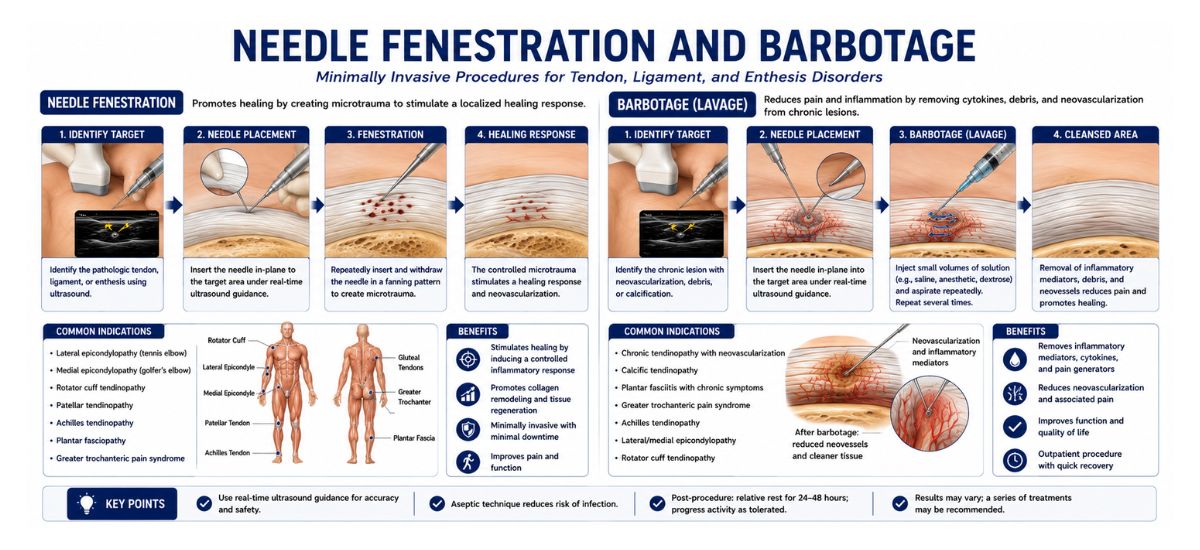
Needle fenestration and barbotage are minimally invasive procedures used to address certain tendon-related conditions.
Needle fenestration is commonly discussed for irritated or chronically symptomatic tendon tissue. Barbotage is a related procedure that may be considered when calcium deposits are present within a tendon.
At DeNova Health, these procedures may be considered when tendon pain or dysfunction has not improved sufficiently with conservative treatment and a more targeted intervention may be appropriate.
What This Procedure Does
Needle fenestration is used to stimulate a local healing response in an area of chronic tendon irritation. The needle is placed into the affected tendon area to encourage the body to respond to the damaged tissue.
Barbotage is used when calcific deposits are contributing to tendon pain or restricted movement. During barbotage, the clinician uses a needle to break up the calcium deposit and may use fluid to help wash out or reduce the buildup.
These procedures are not used for every type of tendon pain. They are considered when the assessment suggests that the tendon problem or calcium deposit can be clearly targeted.
When Needle Fenestration or Barbotage May Be Considered
These procedures may be discussed when tendon pain is persistent, localized, and not settling with basic care.
They may be considered when:
- Tendon pain is ongoing: Symptoms continue despite rest, therapy, activity changes, or supportive care.
- A chronic tendon problem is present: The tendon may be irritated, thickened, or painful with repeated use.
- Calcium deposits are involved: Barbotage may be considered when calcific buildup is contributing to pain or limited movement.
- Movement is being affected: Pain is limiting walking, reaching, lifting, exercise, work, or daily activity.
- A clear target can be identified: The procedure works best when the affected tendon area or calcium deposit can be located accurately.
What to Expect at Your Visit
Your visit starts with an assessment of your symptoms, movement, and medical history. If needle fenestration or barbotage is appropriate, the clinician will explain which procedure is being considered and why.
The treatment area is cleaned and prepared. A needle is then guided into the affected tendon area or calcium deposit. You may feel pressure, aching, or temporary discomfort during the procedure.
Aftercare and Recovery
Aftercare may include:
- Short-term activity changes: You may need to avoid heavy loading, repetitive strain, or intense activity for a period of time.
- Temporary soreness: The tendon area may feel tender, irritated, or achy after treatment.
- Gradual return to movement: Activity is usually reintroduced in stages based on comfort and clinical guidance.
- Rehabilitation support: Physical therapy or exercise training may be recommended to help restore strength and function.
- Follow-up review: A follow-up visit may be used to assess symptoms, movement, and next steps.
Possible Side Effects and Limitations
Possible side effects may include:
- Temporary pain flare-up: The treated area may feel more sore before it begins to settle.
- Bruising or swelling: Mild bruising, swelling, or tenderness may occur around the needle site.
- Short-term stiffness: The tendon or nearby joint may feel tight or sensitive after treatment.
- Incomplete relief: Some patients may need additional therapy, repeat assessment, or another treatment option.
- Variable results: Outcomes depend on the tendon involved, the severity of the condition, and the follow-up care plan.
These procedures are not guaranteed fixes. They may be helpful when the tendon problem is properly diagnosed and paired with the right recovery plan.
Book a Needle Fenestration or Barbotage Consultation
If tendon pain is not improving or a calcium deposit may be contributing to your symptoms, DeNova Health can assess whether needle fenestration or barbotage may be appropriate.
Book an appointment to review your symptoms, discuss your treatment options, and determine whether this procedure fits your care plan.