
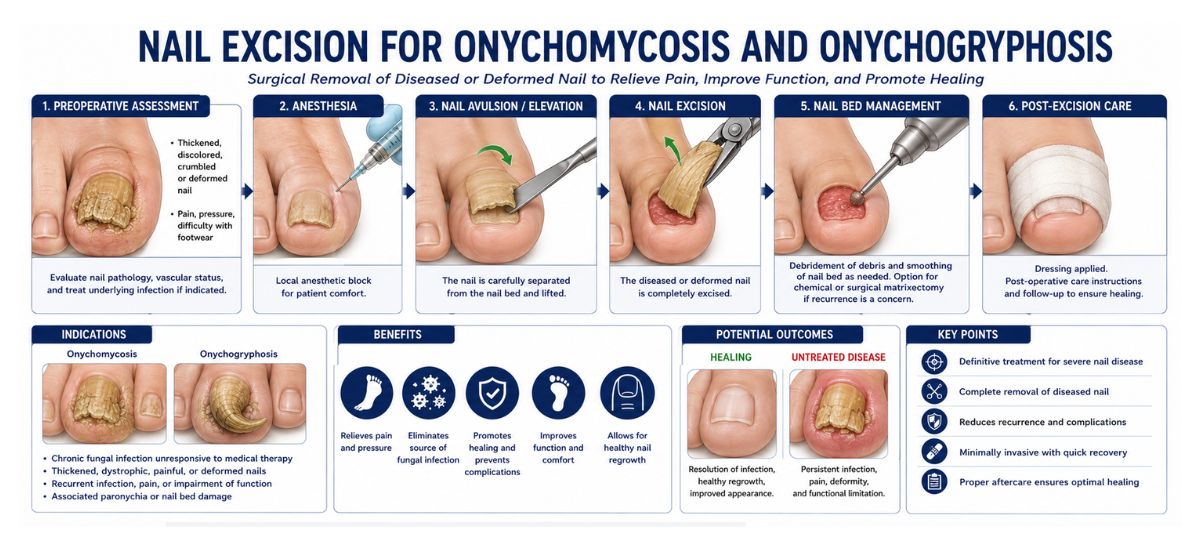
Nail excision is a procedure used to remove part or all of a damaged or problematic nail.
The procedure may be considered for nail conditions affecting the structure, thickness, or growth of the nail. Onychomycosis is a fungal nail condition that can affect the appearance and integrity of the nail, while onychogryphosis refers to abnormal nail thickening and curvature that may become difficult to manage over time.
At DeNova Health, nail excision may be discussed when symptoms, nail changes, or difficulty with routine care suggest that a procedural approach may be appropriate.
What This Procedure Helps Address
Nail excision is used to reduce pressure, remove painful or damaged nail tissue, and make the area easier to treat or manage.
Depending on the nail problem, the procedure may involve removing only the affected part of the nail or removing the full nail. In some cases, treatment may also focus on preventing the same section of nail from growing back.
This procedure does not replace proper diagnosis. If a fungal infection is suspected, testing or antifungal treatment may still be needed as part of the care plan.
When Nail Excision May Be Considered
It may be considered when:
- The nail is severely thickened: The nail is difficult to trim, presses into footwear, or causes discomfort when walking.
- Fungal nail changes are advanced: The nail is crumbly, lifted, painful, or not responding well to other treatment options.
- The nail is curved or distorted: The nail shape creates pressure on the toe or surrounding skin.
- Shoe pressure is causing pain: Walking, standing, or wearing regular footwear becomes uncomfortable.
- Ongoing nail care is difficult: The nail is too thick, fragile, or deformed to manage safely with routine trimming.
What to Expect at Your Visit
Your visit starts with a review of the nail, surrounding skin, symptoms, footwear pressure, and medical history. If nail excision is appropriate, the clinician will explain whether partial or full nail removal is being considered.
The toe is cleaned and prepared, and the area is numbed before the nail is removed. You should not feel sharp pain during the procedure, though pressure or movement may be noticed.
Aftercare and Healing
Aftercare may include:
- Keeping the toe covered: A dressing may be used while the area begins to heal.
- Limiting pressure: You may need to avoid tight shoes or heavy pressure on the toe for a short time.
- Watching for irritation: Redness, swelling, drainage, or increasing pain should be monitored.
- Follow-up care: A follow-up visit may be recommended to check healing and review next steps.
- Ongoing nail or fungal care: Antifungal treatment, routine nail care, or footwear changes may still be needed.
Possible Side Effects and Limitations
Possible side effects may include:
- Temporary pain or tenderness: The toe may feel sore once the numbing wears off.
- Drainage or bleeding: Some drainage or minor bleeding can happen during early healing.
- Swelling or redness: Mild irritation around the toe may occur after the procedure.
- Infection risk: Increasing redness, warmth, swelling, odour, or worsening pain should be checked.
- Nail regrowth changes: If the nail grows back, it may return slowly, look different, or become thickened again.
Nail excision may help reduce pain and pressure, but it may not fully resolve the underlying cause. Fungal nails may still require antifungal treatment, and thickened or curved nails may need ongoing foot care.
Book a Nail Excision Consultation
If a thickened, fungal, curved, or painful toenail is making footwear, walking, or nail care difficult, DeNova Health can assess whether nail excision may be appropriate.
Book an appointment to review your nail concerns, discuss your treatment options, and determine the best next step for comfort, healing, and long-term nail care.