
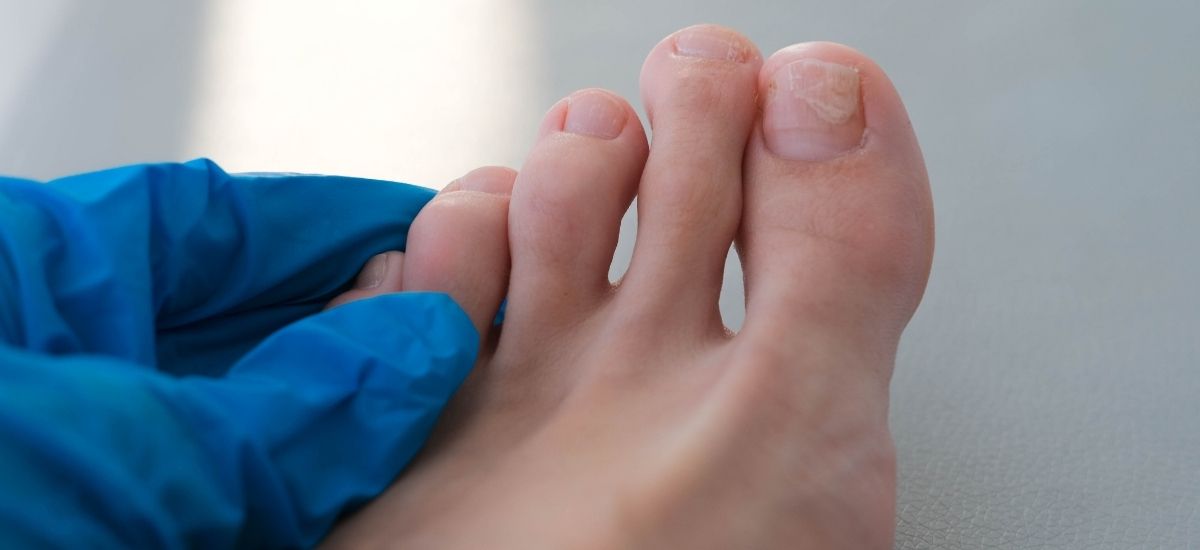
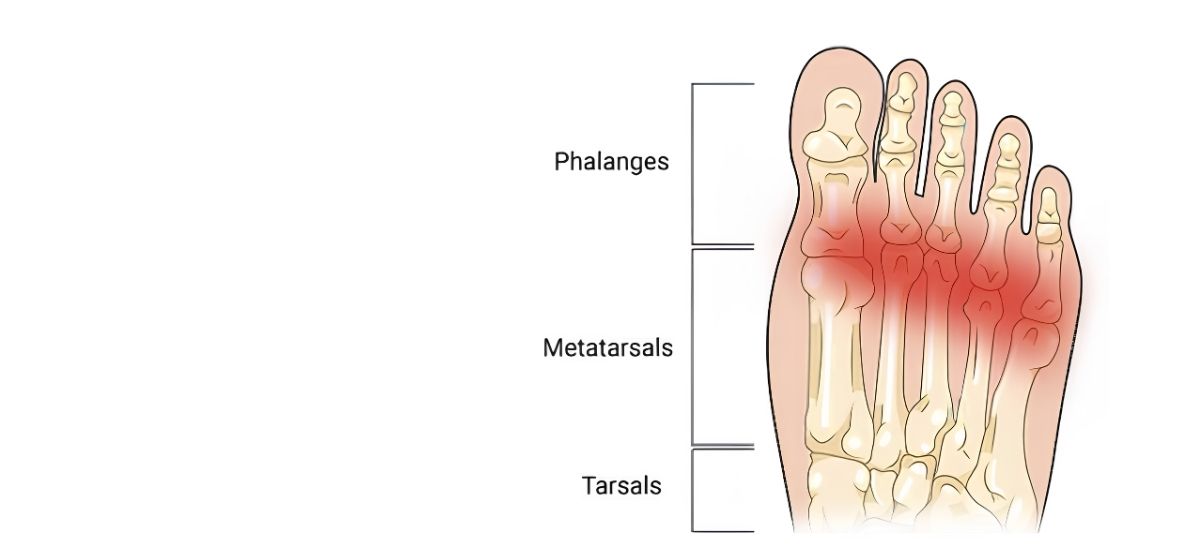
Morton's neuroma, also called an intermetatarsal neuroma, is an irritation or thickening of a nerve in the ball of the foot. It usually develops between the long bones of the foot and can cause pain that travels into the toes.
Many people describe the feeling as burning, tingling, numbness, or like they are walking on a small pebble. The pain may become worse with prolonged walking, hard surfaces, tight shoes, or heeled footwear.
DeNova Health helps patients identify where the nerve irritation is coming from and offers treatment options to reduce pressure through the forefoot, improve cushioning, and support more comfortable walking.
Symptoms of Morton's Neuroma
Morton's neuroma often feels different from regular foot soreness because it can involve nerve symptoms. Pain may start in the ball of the foot and spread into the toes.
Common symptoms may include:
- Ball-of-foot pain: Pain is often felt under the forefoot, usually between the toes.
- Burning or tingling: A sharp, hot, or electrical feeling may travel from the ball of the foot into the toes.
- Numbness: You may notice a loss of feeling or a "wooden" sensation in the toes.
- Stepping on a pebble: It can feel like there is a small stone, fold in your sock, or bump under the foot.
- Discomfort in shoes: Symptoms are often worse when wearing narrow, tight, or heeled shoes.
Common Causes and Risk Factors
Repeated pressure in the forefoot can irritate the nerve and lead to Morton's neuroma. Tight shoes, activity levels, and how the foot moves may all play a role.
Common causes and risk factors may include:
- Repetitive forefoot pressure: Repeated stress through the ball of the foot can irritate the nerve.
- Tight or narrow shoes: Footwear that squeezes the toes can increase pressure around the nerve.
- Heeled footwear: A raised heel can shift more weight into the forefoot.
- Hard surfaces: Prolonged walking or standing on hard ground may make symptoms worse.
- Forefoot mechanics: The way pressure moves through the ball of the foot can contribute to nerve irritation.
How DeNova Health Assesses Morton's Neuroma
At your appointment, our team will ask where the pain is located, which toes are affected, what the symptoms feel like, and which shoes or activities make it worse. This helps us understand whether the pain is likely coming from nerve irritation, joint inflammation, pressure overload, or another forefoot condition.
Depending on your needs, care may involve chiropody, podiatry, physical therapy and exercise training, or other clinical support. The goal is to reduce pressure around the irritated nerve and improve comfort during daily movement.
Treatment Options at DeNova Health
Treatment options may include:
- Custom orthotics, shoes and braces: Custom orthotics with a metatarsal pad can help offload the neuroma and reduce pressure in the ball of the foot.
- Orthopaedic footwear: Wide or rocker-soled footwear may help reduce compression through the forefoot.
- Toe and foot accessories: Padding or forefoot support may help cushion the area and reduce irritation during walking.
- Injection therapies: Options such as corticosteroid, PRP, ethyl alcohol, or ultrasound-guidance injections may be discussed for ongoing nerve-related pain.
- Immobilization: A walking boot may be considered when the forefoot needs a period of reduced stress and protection.
Surgical options may be discussed when appropriate.
When to Seek Care for Forefoot Nerve Pain
You should seek care if you notice:
- Pain in the ball of the foot: The forefoot feels sore, sharp, or irritated when standing or walking.
- Tingling or numbness into the toes: Symptoms travel from the ball of the foot into one or more toes.
- A pebble-like feeling: It feels like you are stepping on a small lump, fold, or stone.
- Symptoms that worsen in shoes: Tight, narrow, or heeled footwear makes the pain more noticeable.
- Pain that limits activity: Walking, standing, exercise, or work becomes harder because of forefoot discomfort.
Book a Morton's Neuroma Assessment
If burning, tingling, numbness, or ball-of-foot pain is making it harder to walk or wear shoes comfortably, DeNova Health can help you understand what may be causing the nerve irritation.
Book an assessment at DeNova Health to review your symptoms, assess your forefoot mechanics, and create a plan to help reduce pressure, improve comfort, and support easier movement.
Patient Resources
View or download our educational rack cards on Morton's Neuroma.
Still Have Questions?
Our friendly staff is here to help. Contact us today for personalized assistance.