

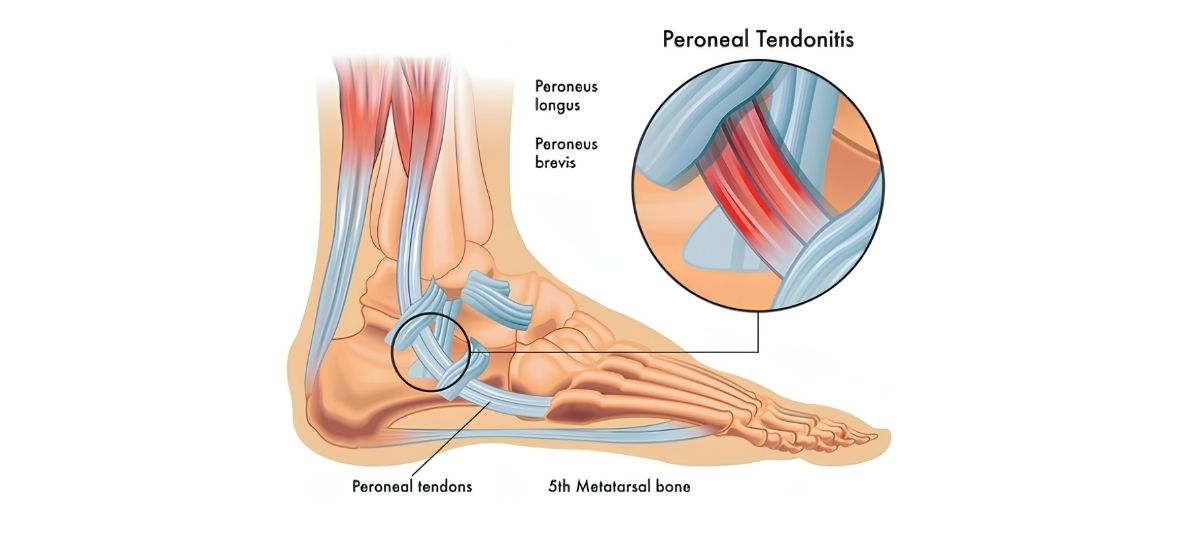
Insertional peroneus brevis tendonitis is irritation or inflammation where the peroneus brevis tendon attaches to the outside of the foot. This area is located near the base of the 5th metatarsal, which is the long bone along the outer edge of the foot.
The peroneus brevis tendon helps stabilize the ankle and supports the foot during walking, standing, and side-to-side movement. When this tendon becomes irritated, you may feel pain, tenderness, or swelling along the outside of the foot.
DeNova Health helps patients understand what may be causing pain along the outer foot and recommends treatment options to reduce tendon strain, improve support, and help restore comfortable movement.
Symptoms of Insertional Peroneus Brevis Tendonitis
Pain from insertional peroneus brevis tendonitis is usually felt along the outside edge of the foot. It may feel worse during activity, after an ankle sprain, or when the foot is placed under repeated side-to-side stress.
Common symptoms may include:
- Outer foot pain: Pain is often felt near the base of the 5th metatarsal on the outside of the foot.
- Tenderness to touch: The attachment point of the tendon is painful when pressed or when shoes rub against it.
- Swelling or redness: A small bump or swollen area may develop on the outer edge of the foot.
- Pain during activity: Discomfort increases with walking, running, or side-to-side movement.
- Stiffness: The outer foot and ankle may feel tight, especially after resting or in the morning.
Common Causes and Risk Factors
Insertional peroneus brevis tendonitis is usually caused by repetitive strain, ankle instability, or footwear that presses against the side of the foot.
Common causes and risk factors may include:
- Repetitive movement: Activities like running, dancing, or sports that place constant stress on the outer foot.
- Foot mechanics: High arches or a foot type that rolls outward can place extra strain on the tendon.
- Previous injuries: A history of ankle sprains can stretch or weaken the tendon, leaving it prone to irritation.
- Tight or narrow footwear: Shoes that press or rub against the base of the 5th metatarsal.
- Sudden increase in activity: Starting a new exercise program or increasing walking distance too quickly.
How DeNova Health Assesses Insertional Peroneus Brevis Tendonitis
During your visit, our team will review your symptoms, history of injuries, and activity levels. We perform a physical exam to check for tenderness, swelling, joint mobility, and ankle stability.
This comprehensive assessment helps us understand the source of your outer foot pain and recommend a treatment plan focused on reducing tendon strain and supporting recovery.
Treatment Options at DeNova Health
Treatment options are designed to reduce strain on the peroneus brevis tendon, protect the outer foot, and help restore comfortable movement.
- Custom orthotics: Tailored support can help distribute weight evenly, improve alignment, and reduce strain on the outer edge of the foot.
- Ankle braces or taping: Stabilizing the ankle can help protect the tendon from side-to-side strain while it heals.
- Orthopaedic footwear: Shoes with adequate width and support can prevent rubbing over the base of the 5th metatarsal.
- Physical therapy and exercises: Guided movements to strengthen the peroneal muscles, improve balance, and restore ankle stability.
- Laser therapy, therapeutic ultrasound, or shockwave therapy: These therapies may be used to help manage pain and support soft tissue recovery.
- Injection therapies: Options such as corticosteroids, platelet rich plasma (PRP), prolotherapy and/or biologic compatible hyaluronic acid may be discussed.
Surgical options may be discussed when appropriate.
When to Seek Care for Outer Foot Pain
You should seek care if you notice:
- Pain along the outside of the foot: The area near the base of the 5th metatarsal feels sore, tender, or irritated.
- Symptoms after an ankle sprain: Outer foot pain develops after the ankle rolls or twists.
- A tender bump or raised area: The tendon attachment point becomes sensitive to touch or pressure from footwear.
- Instability with movement: The ankle feels weak, unsteady, or more likely to roll during activity.
- Pain that keeps returning: Symptoms improve with rest but come back when you walk, exercise, or stand for longer periods.
If you have severe pain, major swelling, bruising, numbness, visible deformity, or difficulty bearing weight, you should seek urgent medical attention to rule out a fracture or more serious injury.
Book an Insertional Peroneus Brevis Tendonitis Assessment
If pain along the outside of your foot is making it harder to walk, exercise, or feel stable on your feet, DeNova Health can help you understand what may be causing the problem.
Book an assessment at DeNova Health to review your symptoms, assess your foot and ankle mechanics, and create a plan to help reduce tendon strain, improve stability, and support more comfortable movement.
Patient Resources
View or download our educational rack cards on Insertional Peroneus Brevis Tendonitis.
Still Have Questions?
Our friendly staff is here to help. Contact us today for personalized assistance.