
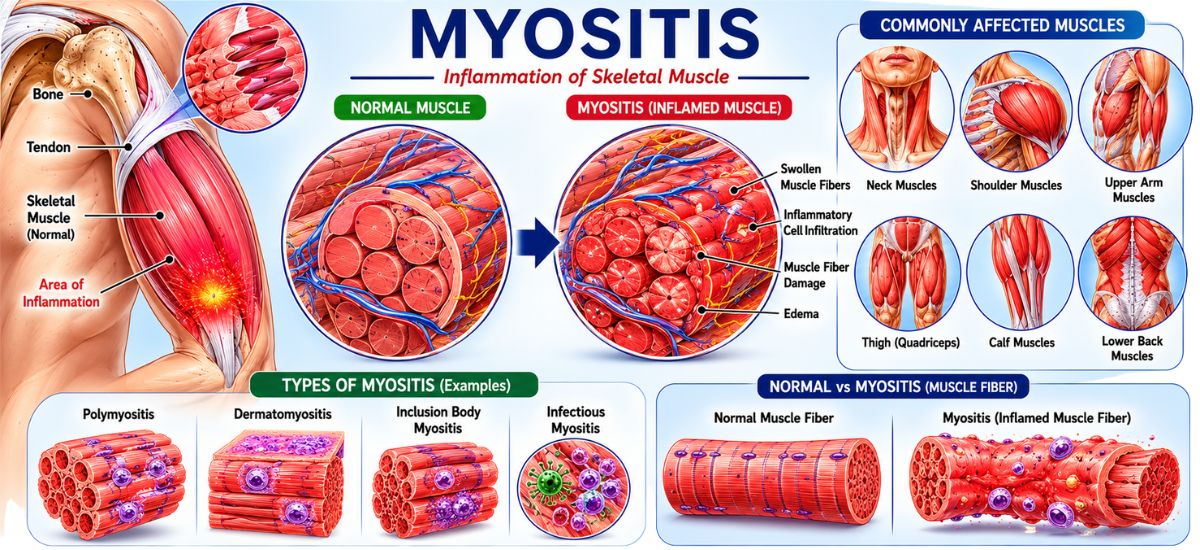
Myositis is a condition involving inflammation in the muscles. The word comes from "myo," meaning muscle, and "itis," meaning inflammation.
For some people, myositis feels like muscle soreness or tenderness. For others, the bigger issue is weakness, fatigue, or difficulty doing regular movements like climbing stairs, getting up from a chair, lifting objects, or walking comfortably.
Because muscle pain and weakness can come from many different causes, DeNova Health starts by looking at your symptoms, movement, strength, and how the problem is affecting your daily routine.
What Myositis Can Feel Like
Common signs may include:
- Muscle weakness: Everyday movements may feel harder, especially stairs, standing from a chair, lifting, or walking.
- Muscle soreness: The affected muscles may ache, feel tender, or become uncomfortable with use.
- Fatigue with activity: Muscles may tire faster than usual during regular tasks.
- Stiffness or reduced mobility: Movement may feel limited, tight, or harder to control.
- Swelling or tenderness: Some areas may feel irritated, sensitive, or sore when touched.
What Can Contribute to Myositis?
Myositis can be connected to different causes, so it is important not to assume every case is simple muscle soreness. Some types are related to autoimmune conditions, while others may be linked to infection, medication reactions, injury, or overuse.
- Inflammatory conditions: Some forms of myositis happen when the immune system affects muscle tissue.
- Repeated strain or injury: Overuse, trauma, or muscle damage can lead to localized irritation.
- Infection or illness: Certain infections may contribute to muscle inflammation or widespread soreness.
- Medication-related muscle symptoms: Some medications can contribute to muscle pain or weakness and should be reviewed with a medical provider.
- Underlying health factors: Fatigue, weakness, or muscle pain may be connected to broader health concerns that need proper assessment.
How DeNova Health Approaches Myositis Care
Care for myositis starts with sorting out whether the issue appears to be local muscle irritation, a movement-related strain, or something that may require further medical investigation. This may include reviewing your symptoms, checking strength and mobility, discussing activity changes, and looking at how the affected area is functioning.
Depending on your symptoms and the area involved, care may include:
- Assessment and movement review: A clinical review can help identify which muscles are affected and whether weakness, pain, or movement changes are present.
- Physical therapy and exercise training: Gentle, guided movement may help maintain strength, mobility, and function without overloading irritated muscles.
- Massage therapy: Soft tissue care may help with localized muscle tightness, soreness, or guarding.
- Therapy-based treatments: Laser therapy, therapeutic ultrasound, TENS, or shockwave therapy may be considered when appropriate for pain or soft tissue irritation.
- Injection therapies: Options such as corticosteroids, platelet rich plasma (PRP), prolotherapy and/or biologic compatible hyaluronic acid may be discussed. Surgical options may be discussed when appropriate.
When It's Worth Booking an Appointment
You should consider booking an assessment if muscle pain, weakness, or fatigue is making movement harder or changing how you go through your day.
- Weakness is noticeable: Stairs, standing from a chair, lifting, walking, or daily tasks feel harder than usual.
- Muscle pain is not settling: Soreness continues longer than expected or keeps returning with activity.
- Movement feels limited: You are stiff, guarded, or avoiding certain movements because of discomfort.
- Symptoms are spreading or worsening: More muscle groups feel affected, or weakness is becoming more obvious.
- You feel generally unwell: Muscle symptoms are paired with fever, major fatigue, rash, unexplained weight loss, or breathing difficulty.
Get Assessed at DeNova Health
If muscle pain, weakness, or stiffness is affecting your mobility, DeNova Health can assess how the affected area is moving and help determine whether treatment, support, or further medical review may be needed.
Book an appointment at DeNova Health to discuss your symptoms and create a care plan focused on safer movement, improved function, and appropriate next steps.