
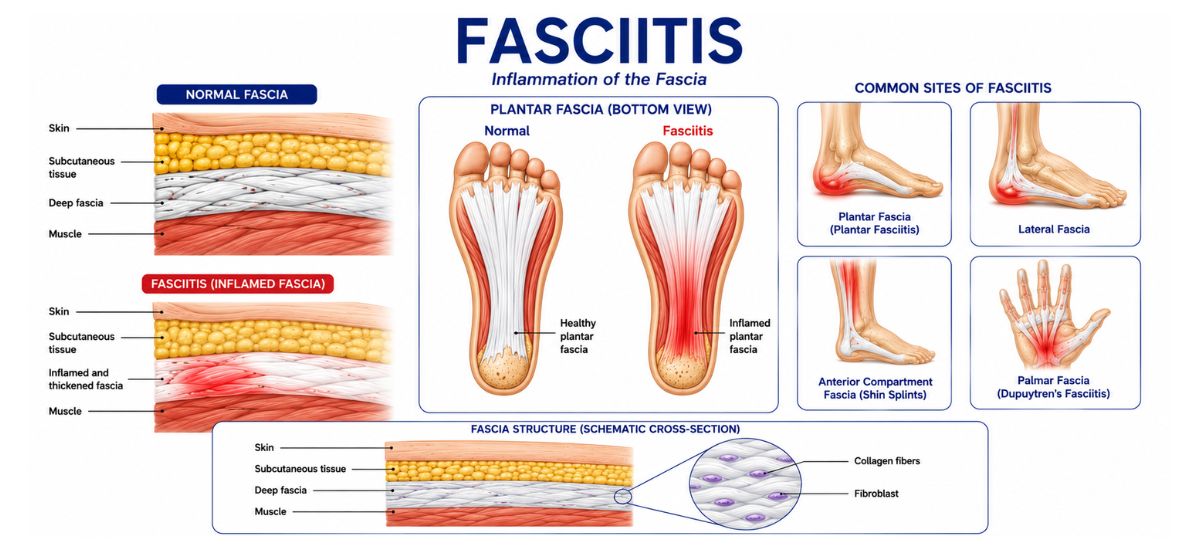
Fasciitis means irritation or inflammation of fascia. Fascia is connective tissue that helps support muscles, joints, and structures throughout the body.
In the foot, one of the most common examples is plantar fasciitis, which affects the band of tissue along the bottom of the foot. Fascia-related pain may show up around the heel, arch, or other areas where tissue is being pulled, compressed, or overloaded.
DeNova Health assesses fascia-related pain by looking at where the discomfort is happening, how the tissue is being stressed, and what may be contributing to irritation during walking, standing, work, or activity.
What You Might Be Feeling
Fasciitis can feel different depending on the area involved. Symptoms may be mild at first, then become more noticeable with repeated use.
Common signs may include:
- Heel or arch pain: Pain may be felt along the bottom of the foot, especially near the heel or arch.
- Start-up discomfort: Symptoms may feel worse when you first stand after rest or take your first steps in the morning.
- Tightness through the foot: The tissue may feel stiff, pulled, or difficult to stretch.
- Pain after activity: Discomfort may increase after walking, standing, running, or being on hard surfaces.
- Tenderness to pressure: The sore area may feel sensitive when pressed or when footwear adds pressure.
Why It May Be Happening
Fasciitis is usually connected to repeated stress through the fascia. The tissue can become irritated when it is asked to absorb more strain than it can comfortably handle.
- Repetitive strain: Walking, running, standing, or increased activity can place ongoing stress on the fascia.
- Poor support: Flat, worn-out, or unsupportive footwear may increase pressure through the foot.
- Tight muscles: Tight calves or limited ankle movement can increase pulling through the heel and arch.
- Foot mechanics: The way the foot moves can affect how much strain is placed on the fascia.
- Activity changes: A sudden increase in exercise, work demands, or time on your feet can trigger symptoms.
How DeNova Health Approaches Fasciitis Care
The goal is to reduce irritation, improve support, and help the fascia tolerate daily movement more comfortably. Depending on your symptoms, care may include:
- Assessment and movement review: A clinical review can help identify where the fascia is being overloaded and what may be contributing to pain.
- Custom orthotics, shoes and braces: Supportive devices may help reduce strain through the heel, arch, or affected tissue.
- Physical therapy and exercise training: Stretching and strengthening may help improve flexibility, movement, and tissue tolerance.
- Therapy-based treatments: Shockwave therapy, laser therapy, therapeutic ultrasound, or TENS may be considered when appropriate.
- Injection therapies: Options such as corticosteroids, platelet rich plasma (PRP), prolotherapy and/or biologic compatible hyaluronic acid may be discussed. Surgical options may be discussed when appropriate.
When It's Worth Booking an Appointment
You should consider booking an assessment if:
- Pain keeps returning: Symptoms improve for a short time but come back with regular activity.
- Your first steps are painful: Standing after rest or getting out of bed causes sharp or noticeable discomfort.
- Footwear is not helping: Supportive shoes, rest, or basic self-care are not settling the pain.
- Daily movement is changing: You are limping, avoiding activity, or changing how you walk to reduce discomfort.
- Symptoms are lasting longer: Pain, tightness, or tenderness continues for more than a short period or keeps getting worse.
Get Assessed at DeNova Health
If heel, arch, or soft tissue pain is making it harder to move comfortably, DeNova Health can assess what may be contributing to the irritation and review care options that fit your needs.
Book an appointment at DeNova Health to discuss your symptoms and create a plan focused on reducing pain, improving support, and helping you move with more confidence.