
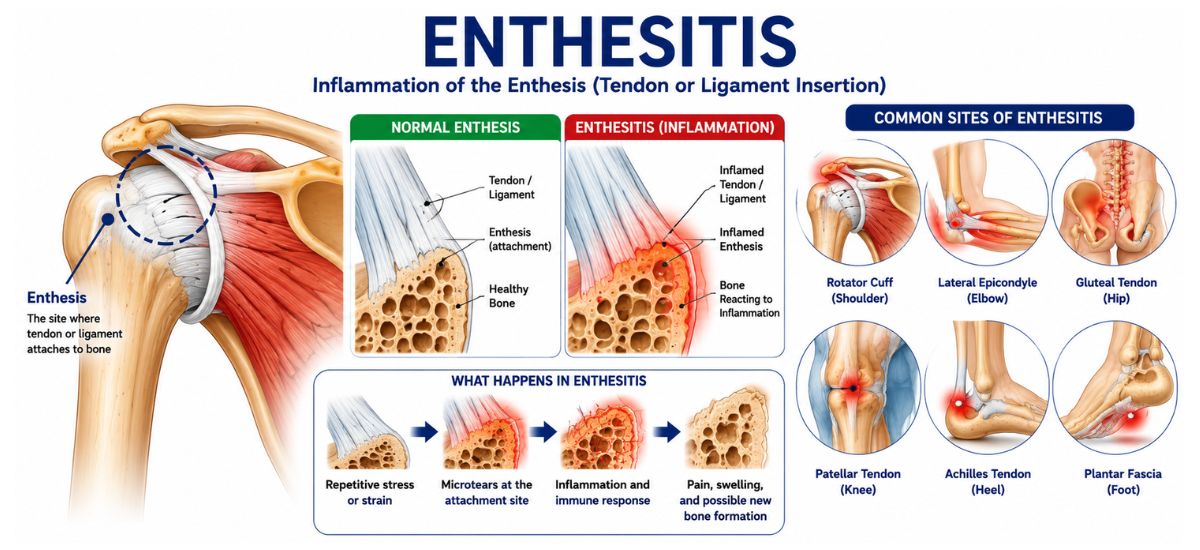
Enthesitis is pain and inflammation at the place where soft tissue attaches to bone. This can involve a tendon, ligament, fascia, or joint capsule.
Because these attachment points help transfer force between muscles, joints, and bones, they can become irritated when the area is overloaded. Enthesitis may affect areas such as the heel, bottom of the foot, ankle, knee, hip, elbow, shoulder, or other joint regions.
Some cases are related to repeated stress or injury. Others may be linked to inflammatory arthritis, which is why a proper assessment is important if pain is persistent, spreading, or paired with swelling and stiffness.
How Enthesitis Can Show Up
Enthesitis can feel different from regular muscle soreness because the pain is often focused right where tissue connects to bone.
Common signs may include:
- Attachment-point pain: Pain is felt in a specific spot where a tendon, ligament, or fascia connects to bone.
- Tenderness with pressure: The area may feel sore when pressed, touched, or irritated by footwear or activity.
- Stiffness after rest: Symptoms may be more noticeable first thing in the morning or after sitting.
- Swelling or warmth: The area may become puffy, irritated, or warm when inflammation is present.
- Pain with loading: Walking, stairs, gripping, lifting, pushing off, or exercise may make symptoms worse.
Why Enthesitis Can Happen
Enthesitis can come from mechanical strain, inflammation, or a combination of both. The cause can depend on the area involved, your activity level, and your overall health history.
- Repeated stress: Ongoing pulling or loading at the attachment point can irritate the tissue.
- Sudden strain or injury: A hard push-off, twist, fall, or overuse injury may trigger symptoms.
- Foot or body mechanics: The way you stand, walk, run, or move can add extra stress to certain attachment points.
- Inflammatory arthritis: Conditions such as psoriatic arthritis or spondyloarthritis can involve enthesitis.
- Activity changes: A quick increase in training, work demands, or time on your feet may overload the area.
How DeNova Health Approaches Enthesitis Care
A visit for enthesitis starts with locating the exact attachment point that is painful and looking at what is placing stress on that area. This may include checking movement, strength, footwear, walking pattern, joint motion, and whether the symptoms appear more mechanical or inflammatory.
If symptoms suggest a broader inflammatory condition, DeNova Health may recommend follow-up with the appropriate medical provider.
Care options may include:
- Focused assessment and movement review: A clinical review can help identify the irritated attachment point and what movements are aggravating it.
- Custom orthotics, shoes and braces: Support may help reduce pulling, pressure, or strain through the affected area.
- Physical therapy and exercise training: Guided exercises can help build strength, improve mobility, and reduce overload.
- Therapy-based treatments: Shockwave therapy, laser therapy, therapeutic ultrasound, or TENS may be considered when appropriate.
- Injection therapies: Options such as corticosteroids, platelet rich plasma (PRP), prolotherapy and/or biologic compatible hyaluronic acid may be discussed. Surgical options may be discussed when appropriate.
When It's Worth Booking an Appointment
You should consider booking an assessment if pain at a tendon, ligament, or fascia attachment point is not settling or is starting to affect how you move.
- Pain is focused in one spot: The soreness is located where tissue attaches to bone, rather than spread through the whole muscle.
- Pressure makes it worse: Touch, footwear, kneeling, gripping, walking, or certain positions irritate the area.
- Stiffness keeps returning: The area feels stiff after rest, in the morning, or after repeated activity.
- Daily movement is changing: You are limping, avoiding certain movements, or compensating to reduce pain.
- Symptoms feel inflammatory: Swelling, warmth, multiple sore areas, or pain paired with ongoing joint stiffness should be assessed.
Get Assessed at DeNova Health
If attachment-point pain is affecting walking, work, sport, or daily movement, DeNova Health can assess the area and help determine the next step.
Book an appointment at DeNova Health to review your symptoms and discuss a care plan focused on reducing irritation, improving support, and helping you move more comfortably.