
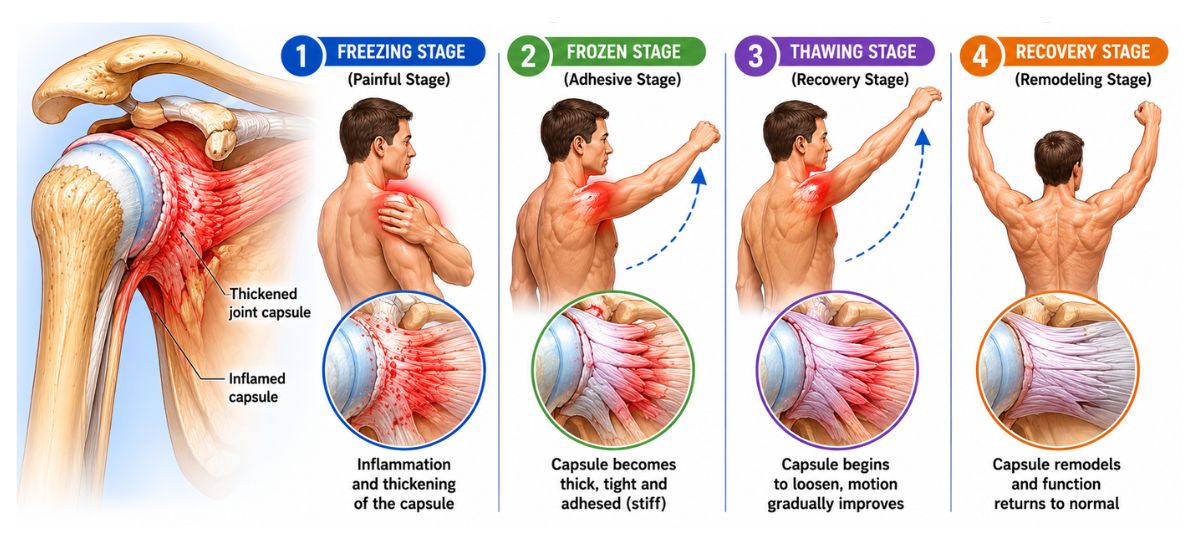
Capsulitis is irritation or inflammation of the capsule around a joint. The capsule is the soft tissue structure that helps support and stabilize the joint.
In the foot, capsulitis most often affects the joints near the ball of the foot, especially around the base of the second toe. It can make walking, standing, barefoot movement, and certain shoes uncomfortable.
DeNova Health assesses joint pain, foot mechanics, footwear pressure, and toe position to help reduce irritation, improve support, and protect comfortable movement.
What You Might Be Feeling
Capsulitis can feel like pain under the ball of the foot or around the base of a toe. It may feel mild at first, then become more noticeable with walking, standing, or pressure from shoes.
Common signs may include:
- Ball-of-foot pain: Pain is often felt under the base of the toe, especially while walking or standing.
- Swelling near the joint: The area around the toe joint may look puffy, irritated, or tender.
- Pebble-like feeling: It may feel like there is a small lump, marble, or bunched-up sock under the foot.
- Shoe discomfort: Tight or flexible shoes may increase pressure and make symptoms worse.
- Toe position changes: In more advanced cases, the toe may begin to drift or feel unstable.
Why It May Be Happening
Capsulitis is usually linked to extra pressure through the ball of the foot. When the joint capsule is stressed repeatedly, it can become inflamed and painful.
- Forefoot pressure: Too much weight through the ball of the foot can irritate the joint capsule.
- Foot structure: A longer second toe, bunions, unstable arches, or certain foot shapes may increase pressure under the joint.
- Tight calf muscles: Limited flexibility can shift more stress toward the forefoot during walking.
- Footwear choice: High heels, narrow shoes, flimsy soles, or unsupportive footwear may worsen symptoms.
- Activity or injury: Running, jumping, long walks, or trauma to the toe area can trigger irritation.
How DeNova Health Approaches Capsulitis Care
The goal is to reduce stress through the painful joint, improve forefoot support, and help prevent the toe from becoming more irritated or unstable. Depending on your symptoms, care may include:
- Assessment and movement review: A clinical review can help identify which joint is irritated and whether toe stability or foot mechanics are contributing.
- Custom orthotics, shoes and braces: Custom support may help redistribute pressure away from the sore joint and improve forefoot alignment.
- Orthopaedic footwear: Supportive shoes with a stable sole and better toe space may help reduce pressure through the ball of the foot.
- Toe and foot accessories: Padding, taping, splints, or cushions may help protect the joint and reduce irritation in footwear.
- Injection therapies: Options such as corticosteroids, hyaluronic acid and platelet rich plasma (PRP) with ultrasound guidance may be discussed. Surgical options may be discussed when appropriate.
Surgical options may be discussed when appropriate.
When It's Worth Booking an Appointment
You should consider booking an assessment if:
- Pain is under the base of a toe: The ball of the foot feels sore, bruised, or irritated in one focused area.
- Swelling keeps coming back: The joint looks puffy or feels tender after walking, standing, or activity.
- It feels like something is in your shoe: You notice a pebble, marble, or bunched-up sock feeling under the foot.
- Shoes are making it worse: Tight, narrow, flexible, or heeled footwear increases discomfort.
- The toe is starting to shift: The toe feels unstable or appears to drift toward another toe.
Get Assessed at DeNova Health
If pain near the ball of your foot is making walking or footwear uncomfortable, DeNova Health can help assess what may be contributing to the joint irritation.
Book an appointment at DeNova Health to review your symptoms and discuss a care plan focused on reducing pressure, improving support, and helping you move more comfortably.