
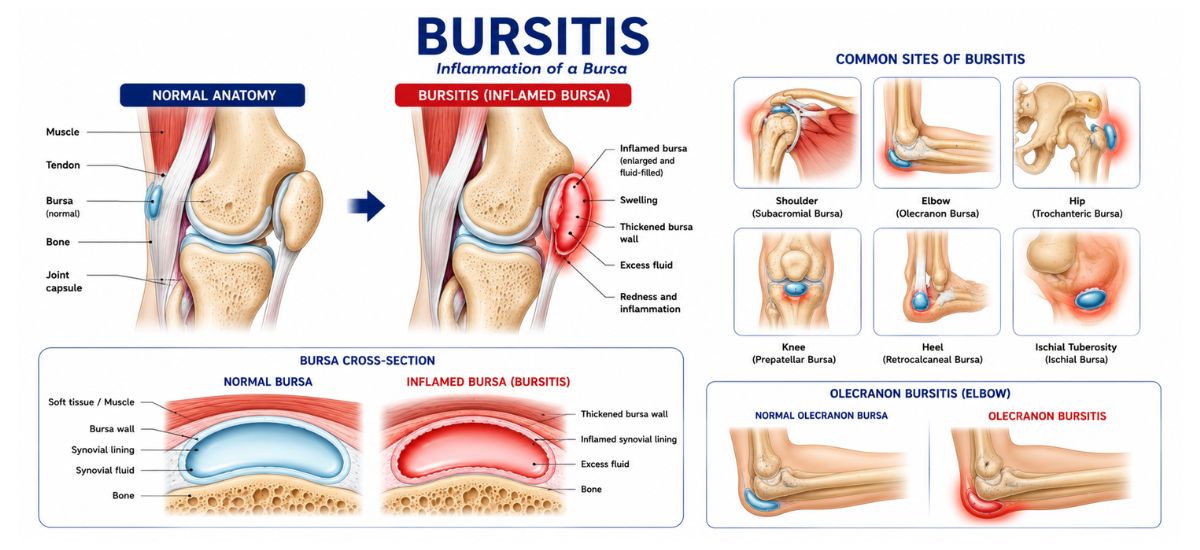
Bursitis happens when a small cushioning sac near a joint becomes irritated or inflamed. These sacs are called bursae, and they help reduce friction between bones, tendons, muscles, and skin.
When a bursa becomes irritated, the area can feel sore, swollen, stiff, or sensitive to pressure. Bursitis can show up around different joints, including the shoulder, hip, elbow, knee, heel, or foot.
At DeNova Health, care starts with finding out where the irritation is coming from, what movements are making it worse, and how the pain is affecting your daily routine.
What Bursitis Can Feel Like
Bursitis can feel sharp, achy, tender, or tight depending on the area involved. The discomfort is usually close to a joint and may become more noticeable with movement or pressure.
Common signs may include:
- Joint-area pain: The sore spot may ache during movement or feel painful when pressed.
- Swelling or puffiness: The area around the joint may look or feel swollen.
- Stiffness: The joint may feel harder to move, especially after rest or repeated use.
- Pressure sensitivity: Kneeling, leaning, lying on the area, or wearing certain footwear may increase discomfort.
- Warmth or redness: In some cases, the area may feel warm or look irritated.
What Can Irritate a Bursa?
Bursitis is usually connected to repeated pressure, overuse, or irritation around a joint. It can also be linked to injury, arthritis, gout, infection, or certain inflammatory conditions.
- Repeated movement: Work tasks, sports, hobbies, or exercise can irritate the bursa over time.
- Direct pressure: Kneeling, leaning on elbows, or pressure from footwear can aggravate the area.
- Joint mechanics: How the joint moves may place extra stress on nearby soft tissue.
- Previous injury: A fall, bump, or strain can irritate the bursa.
- Underlying inflammation: Arthritis, gout, or other inflammatory conditions may increase the risk.
How DeNova Health Approaches Bursitis Care
Bursitis care is focused on calming the irritated area, reducing pressure, and helping the joint move more comfortably. A visit may include reviewing your symptoms, checking the affected joint, looking at how you move, and identifying activities or footwear that may be adding stress.
Depending on the location and severity of symptoms, care may include:
- Assessment and movement review: A clinical review can help identify which area is irritated and what may be adding pressure.
- Custom orthotics, shoes and braces: Support may help reduce pressure when bursitis is affected by foot, ankle, knee, or lower-body mechanics.
- Physical therapy and exercise training: Guided movement can help improve strength, flexibility, and joint control.
- Therapy-based treatments: Laser therapy, therapeutic ultrasound, TENS, or shockwave therapy may be considered when appropriate.
- Injection therapies: Options such as corticosteroids, platelet rich plasma (PRP), prolotherapy and/or biologic compatible hyaluronic acid may be discussed. Surgical options may be discussed when appropriate.
Surgical options may be discussed when appropriate.
When It's Worth Booking an Appointment
You should consider booking an assessment if:
- Pain is affecting your routine: Walking, stairs, work, sleep, exercise, or daily tasks are becoming harder.
- The area stays swollen or tender: The joint area remains puffy, sore, warm, or sensitive to pressure.
- Movement feels restricted: You are avoiding certain positions or cannot move the joint normally.
- Symptoms keep coming back: The pain improves for a while, then returns with the same activity or pressure.
- There are signs of infection: Fever, spreading redness, heat, or severe swelling should be checked promptly.
Get Assessed at DeNova Health
If joint-area pain, swelling, or pressure sensitivity is making movement uncomfortable, DeNova Health can help assess the problem and review treatment options that fit your needs.
Book an appointment at DeNova Health to discuss your symptoms and create a care plan focused on reducing irritation, improving comfort, and helping you return to daily activity.