
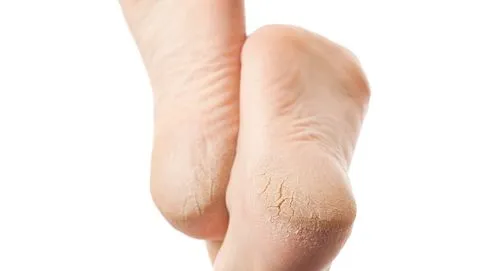
Heel fissures, also known as cracked heels, can be a simple cosmetic problem and a nuisance, but can also lead to serious medical problems. Heel fissures occur when the skin on the bottom, outer edge of the heel becomes hard, dry and flaky, sometimes causing deep fissures that can be painful or bleed.
Causes of Heel Fissures
Heel fissures can affect anyone, but risk factors include; living in a dry climate, obesity, consistently walking barefoot, wearing sandals or open-backed shoes, and inactive sweat glands. Like many foot conditions, heel fissures can become more dangerous if they go untreated and become deep or infected. This is especially dangerous for people with diabetes or compromised immune systems.
Treatments
Moisturizing the feet regularly can prevent heel fissures. Once they occur, you can use a pumice stone daily to gently decrease the thick and flaky layer of skin. Avoid going barefoot or wearing open-backed shoes, sandals or shoes with thin soles. Shoes with strong shock absorption can help to improve the condition. Moisturizing the feet at least twice a day and wearing socks over moisturizer while sleeping can also help.
If the problem persists, see your foot doctor.
What Happens?
This condition first begins as dry, scaly skin on the bottom of the feet, especially at the heels. This is a common problem, which can easily be treated with a moisturizer. However, sometimes the epidermis (outer layer of the skin) begins to crack and the moisture barrier is broken, which leads to deep fissures being formed. This can occur in people who have dry skin or live in a dry climate, or it can occur in association with a medical condition such as diabetes, venous stasis, cancer, or multiple other medical issues.
What Should I Do?
Prevention is the best treatment of heel fissures! However, many times patients don’t realize the problem until it’s too late. Not to worry, though. Our foot care specialists can help you treat your feet back to health. You may need to apply anti-bacterial medication to keep infections at bay. A mild exfoliator and pumice stone can help remove the unwanted callus that surrounds fissured skin and a moisturizer should be applied twice daily.
Until you’ve nursed your skin back to health, try covering your heels in petroleum jelly at night, then slipping on some cotton socks to lock moisture in while you sleep.
Once the fissures have healed, it is still important to keep up your moisturizing routine by applying cream or lotion to the bottom of your feet and heels once daily. This will go a long way toward preventing fissures from recurring.
Conclusion
Cracked heels can be treated quickly and easily at home with moisturizers and products that thin the skin. To prevent cracked heels, people should ensure that a moisturizer is applied daily to the feet to prevent them drying out.
People should never try and treat cracked heels at home if they are associated with a medical condition. Instead, they should seek the advice of a doctor.
If the cracks are severe, it is important to get the advice of a specialist to prevent the wounds becoming infected. Book an appointment asap if you would like to have your feet checked for heel fissures.